

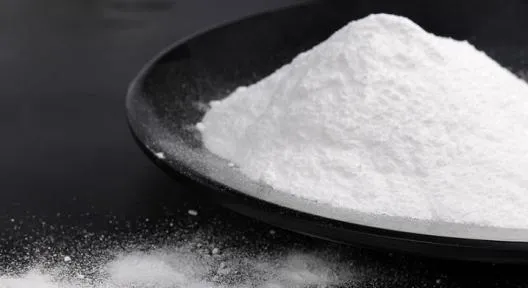
Industrial-grade soda ash (sodium carbonate) is a foundational bulk chemical for glass manufacturing, detergent formulation, water treatment, and pulp & paper production. While most buyers focus only on total alkali content, trace impurities tend to be the hidden cause of defective finished goods, equipment corrosion, unstable chemical reactions, and batch inconsistency. In cross-border B2B procurement, unregulated impurity levels will likely lead to rejected shipments, extra production costs, and compliance risks.
1. Total Alkali Content (Na₂CO₃ Purity)
Total alkali is the core benchmark of soda ash quality, indirectly reflecting overall impurity levels. Qualified industrial soda ash tends to have a dry-based sodium carbonate content above 98.8%, while premium grades for high-end manufacturing can reach ≥99.4% according to GB/T 210-2022 and ISO 2461 international standards. Lower total alkali content means higher residual miscellaneous salts and inert substances, which may dilute reaction efficiency and reduce finished product yield.
Buyer Checkpoint: Glass and fine chemical industries should prioritize dry-based purity ≥99.2%; general water treatment and detergent production may accept qualified grade ≥98.8% to balance cost and performance.
2. Chloride Content (NaCl Impurity)
Chloride is the most common by-product impurity in soda ash, mainly introduced from raw industrial salt during ammonia-soda and combined-soda production processes. Excess chloride will likely cause severe corrosion to high-temperature furnaces, stainless steel pipelines, and reaction vessels. In glass production, high chloride levels tend to generate bubbles and haze, reducing glass light transmittance and structural stability.
Standard industrial-grade soda ash usually controls chloride content ≤0.70% for premium grade and ≤1.20% for qualified grade. Buyers engaged in high-temperature continuous production must strictly limit chloride residues to avoid long-term equipment loss.
Buyer Checkpoint: Glass factories require chloride ≤0.5%; conventional chemical and detergent industries can tolerate 0.5%–0.9% ranges.
3. Iron Content (Fe Impurity)
Iron impurity is the key indicator affecting soda ash color and high-end product applicability. Trace iron elements tend to cause finished glass, detergent powder, and chemical products to turn yellow or dark, directly downgrading commercial value. Iron residues mainly come from production equipment abrasion and raw material impurities.
Premium industrial soda ash strictly controls iron content ≤0.0035%, while regular qualified products allow up to 0.01%. For transparent glass, cosmetic-grade detergent, and food-contact auxiliary materials, excessive iron content will likely result in unqualified visual quality and batch color difference.
Buyer Checkpoint: Transparent glass and fine chemical scenarios must confirm iron content ≤0.0035%; general industrial scenarios can adopt conventional iron control standards.
4. Water Insoluble Matter
Water insoluble substances include mineral dust, silicate residues, and undissolved inert particles. This impurity tends to cause pipeline blockage, filter screen clogging, and sediment precipitation in liquid-phase reaction systems. In water treatment and detergent production, excessive insoluble matter may reduce solution clarity, affect flocculation and decontamination effects, and increase on-site filtration costs.
Per current national and international standards, premium soda ash controls water insoluble matter ≤0.02%, and qualified grade is normally below 0.15%. Large-scale continuous dosing systems tend to be more sensitive to this indicator.
Buyer Checkpoint: Water treatment and liquid detergent production require insoluble matter ≤0.03%; dry powder formulation industries have relatively lower sensitivity.
5. Sulfate Content (SO₄ Residue)
Sulfate impurity is a minor but non-negligible indicator in high-standard procurement. Excess sulfate will likely affect the stability of alkaline solution systems and cause secondary precipitation in chemical synthesis reactions. Premium industrial soda ash tends to limit sulfate content ≤0.03%, which is essential for high-purity chemical processing and electronic-grade water treatment scenarios.
6. Moisture & Caking Residue
Surface moisture is not a chemical impurity but a critical physical indicator for cross-border shipping and storage. High moisture content will likely cause soda ash caking, material bridging, and uneven dosing during sea transportation and long-term warehousing. It may also indirectly increase the relative content of active impurities and affect batch stability.
Why Impurity Control Matters for Bulk Soda Ash Import
Most end-product quality instability does not stem from wrong grade selection, but from uncontrolled trace impurities. In long-term bulk procurement, stable low-impurity indicators tend to reduce production failure rates, extend equipment service life, and lower overall operational costs far more effectively than simply pursuing low unit prices.
Quick Inspection Checklist for Buyers
Verify full COA data: total alkali, chloride, iron content, water insoluble matter, sulfate, and moisture
Match indicators with downstream scenarios (glass / detergent / water treatment / fine chemical)
Confirm compliance with ISO 2461 and GB/T 210-2022 for cross-border shipping
Check batch consistency to avoid floating impurity data across shipments
Conclusion
Industrial soda ash impurities tend to determine downstream product quality and production stability more than basic purity data. From 2026 to 2030, downstream industrial standards will likely become increasingly stringent, making precise impurity indicator verification a core part of professional soda ash procurement. Buyers who prioritize stable low-chloride, low-iron, and low-insoluble-matter specifications will tend to gain more stable production benefits.