

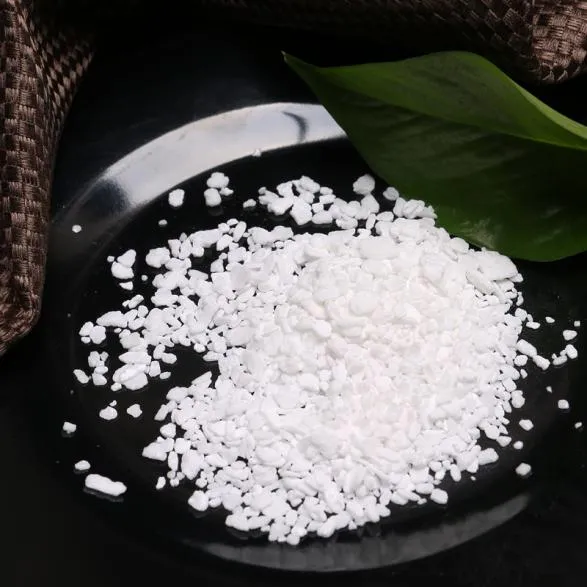
Calcium chloride (CaCl₂) is the most cost-effective and high-efficiency inorganic salt widely adopted in road winter maintenance and mining site environmental management. Unlike traditional sodium chloride (road salt), it features ultra-low temperature resistance, exothermic dissolution, and long-lasting dust-binding performance. This article thoroughly explains the scientific working principles of calcium chloride in road de-icing/anti-icing and mine dust suppression, helping road maintenance teams and mining project owners understand its advantages, application scenarios, and operational logic.
1. Working Principle of Calcium Chloride for Road De-Icing & Anti-Icing
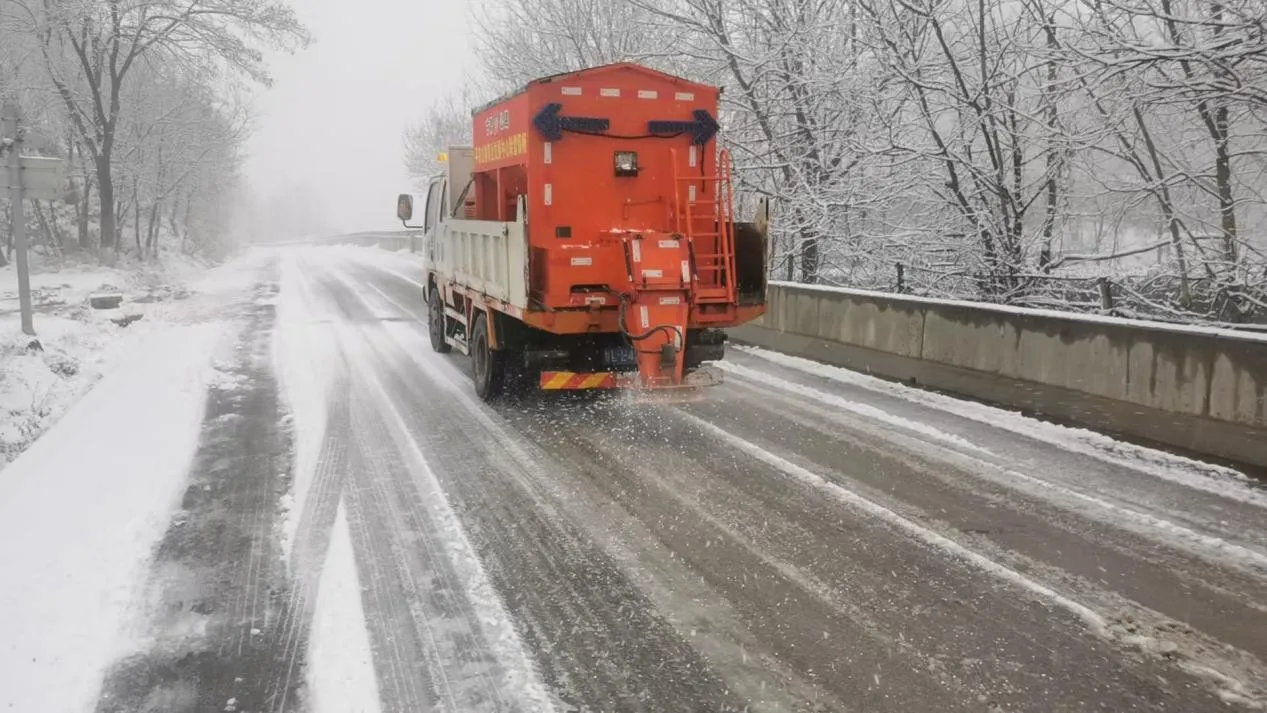
Calcium chloride melts snow and ice and prevents re-freezing relying on two core physical and chemical mechanisms: freezing point depression and exothermic dissolution reaction, enabling stable de-icing performance in extreme low-temperature environments.
1.1 Freezing Point Depression Mechanism
Pure water freezes at 0°C (32°F). After calcium chloride dissolves in snow and ice, it forms a high-concentration calcium chloride brine. The brine can significantly reduce the freezing point of water to -50°C (-58°F), far lower than ordinary salt. This breaks the molecular crystallization structure of ice and snow, melts solid ice into liquid brine, and fundamentally prevents water from re-freezing on road surfaces. It solves the problem of incomplete de-icing and secondary freezing of traditional deicers in cold weather.
1.2 Exothermic Dissolution Reaction (Core Advantage)
Different from sodium chloride that absorbs heat or releases little heat when dissolving, calcium chloride is a typical exothermic salt. When contacting ice and snow, it rapidly absorbs surface moisture and dissolves, releasing a large amount of heat instantly. The self-generated heat actively melts compacted ice, thick snow layers, and frozen road surfaces, greatly accelerating the de-icing speed. This mechanism allows calcium chloride to work efficiently even in blizzards and ultra-low temperature weather where ordinary deicers fail completely.
1.3 Anti-Bounce & Long-Lasting Anti-Icing Effect
The calcium chloride brine formed after dissolution has strong adhesion and will not bounce or scatter with vehicle tires like granular salt. It tightly adheres to asphalt and concrete road surfaces to form a protective water film, which can continuously inhibit ice crystal growth. It provides long-duration anti-icing protection for roads, runways, and parking lots, reducing repeated spreading frequency and lowering winter road maintenance costs.
2. Working Principle of Calcium Chloride for Mine Dust Suppression
Open-pit mines, haulage roads, ore stockyards, and construction gravel roads suffer from serious flying dust, which endangers construction safety, reduces visibility, and causes environmental pollution. Calcium chloride controls mine dust mainly through its unique hygroscopic deliquescence and dust particle bonding properties, realizing long-term stable dust suppression.
2.1 Strong Hygroscopicity to Lock Surface Moisture
Calcium chloride is highly hygroscopic and can actively absorb water molecules from the air and ground soil. After spreading on mine unpaved roads and stockyards, it continuously locks ambient moisture to keep the surface soil and ore particles in a long-term micro-wet state. Unlike water spraying that dries up quickly, calcium chloride maintains a stable damp layer on the ground, fundamentally preventing dry dust from being blown up by wind or stirred by vehicles.
2.2 Particle Curing & Agglomeration Mechanism
After deliquescing into brine, calcium chloride penetrates into the gaps of mine dust and gravel particles. As the moisture slowly evaporates, calcium chloride crystals precipitate and wrap fine dust particles tightly, bonding loose dust and gravel into a solid overall structure. This cures the mine road surface, improves road compactness and hardness, avoids dust re-bouncing, and also reduces road gravel loss and vehicle rolling damage.
2.3 Weather Resistance & Long Service Life
Calcium chloride dust suppression agent is not easy to lose with light rain or wind erosion. It can adapt to high-temperature dry seasons and windy mine environments. A single spraying operation can maintain effective dust suppression for several weeks, greatly reducing the frequency of mine dust control operations, saving water resources and labor costs for mining enterprises.
3. Why Choose Calcium Chloride Over Traditional Deicers & Dust Suppressants
Ultra-low temperature adaptability: Normal deicing salt fails below -10°C, while calcium chloride works stably down to -50°C, suitable for high-latitude and alpine mining areas and road sections.
Dual-function integration: It can be used for winter road de-icing and all-season mine dust suppression, realizing multi-scenario reuse and reducing procurement costs.
High cost performance: Fast acting, long-lasting effect, less dosage required, and lower comprehensive maintenance cost than single-function dust suppressants and deicers.
Low corrosion & environmental friendly: Moderate corrosion to roads and equipment, no harmful residue, compliant with international mine environmental protection standards.
4. Applicable Scenarios
De-icing & Anti-icing: Highway roads, municipal roads, airport runways, parking lots, bridge decks, and residential community roads in winter snow and ice weather.
Mine Dust Suppression: Open-pit mine haulage roads, ore stacking yards, tailings ponds, quarry access roads, and industrial gravel roads.
Conclusion
The core competitiveness of calcium chloride in road maintenance and mine environmental management comes from its unique physical and chemical properties: exothermic dissolution + freezing point depression for efficient low-temperature de-icing, and hygroscopic deliquescence + particle curing for long-term mine dust suppression. For global road maintenance teams and mining enterprises, calcium chloride is a reliable, cost-saving, and high-efficiency multifunctional chemical solution for year-round road and site management.